
900 results found for your search "The 2018/19 GCSE Contextual Challenge and how to go about it"
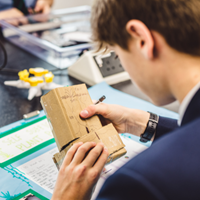
James Dyson Foundation Primary Resources, New primary engineering workshops to support design and technology in the classroom Teachers can now access a new range of primary engineering workshops from the James Dyson Foundation, designed to bring design and technology to life through practical, engaging experiences. The programme includes a brand-new robotics workshop for Upper Key Stage 2. Pupils learn basic coding by programming Sphero RVR+ robots to move through obstacles, helping them apply their knowledge in a real-world context. The session also introduces what engineering is...

Designing 132 Online PDF, Designing 132 | Winter 2025 Designing magazine showcases excellence in design across all phases of education, from primary schools to universities, alongside commercial and industrial practice. Each issue highlights how design thinking, making and creativity connect education, industry and society. This Winter 2025 issue explores how Design & Technology equips young people with the skills, mindsets and values needed for a rapidly changing world. From sustainable materials and circular design to graduate journeys, enterprise, policy influence and iconic products, the issue reflects...

Projects on a Page: Early Key Stage 2 Pack of Nine Planners, New planner for 2023 Year 3-6 The Key Practitioners- focuses on a selection of recommended key individuals from across the design and technology specialisms. This is focused for KS2 but can be delivered at any time across those year groups. The planner gives your ideas for how you can incorporate key individuals into your planning and units of work as well as giving you an overview of each of the recommended individuals so as to help you select the...
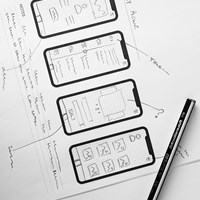
Technical Knowledge, These downloadable member-only units cover a range of aspects of technical knowledge. These units will be regularly developed and added to, creating a broad suite of resources to use in the classroom. CAD Onshape 1 - this delves into the basics of how to get started with PTC Onshape, including hints and tips on how to embark upon basic modelling with this cloud-based CAD software. CAD Sketchup 1 - SketchUp is a free, cloud-based 3D modelling CAD package that is available to students...

Communication Curriculum Units, These downloadable member-only units cover a range of aspects of communication. These units will be regularly developed and added to, creating a broad suite of resources to use in the classroom. 2D Drawing - this offers an introduction to 2D sketching techniques and mark making to communicate design intentions. 3D Drawing 1 - an introduction to 3D sketching using BLOX (a 3D construction cube) as an object for visual reference. 3D Drawing 2 - this resource explores 3D drawing including exploring perspective
Masterclass with Seymourpowell - Sketching and Rendering in Concept Design, This inspiring masterclass has been developed in collaboration with Seymourpowell and The Design and Technology Association. Take a look at this video to learn moreAn exclusive session on 'Sketching & Rendering in Concept Design'. This e-learning masterclass will take D&T teachers through the process of concept design at Seymourpowell. With a focus on sketching and rendering, see how Dick Powell and Neil Baron produce ideas, their techniques when presenting ideas to clients, and how they move...

Curriculum Consultant and Trainer (0.2 FTE, 1 day a week), Join Our Team: Curriculum Consultant and Trainer Are you passionate about transforming Design and Technology education? We’re looking for an experienced D&T professional to join our team, helping shape the future of D&T teaching through high-quality professional development and resource creation. In this outward-facing role, you’ll work closely with schools and educators across the country, using your expertise to design and deliver inspiring CPD, both in person and online. You’ll also contribute

Candoo Cards, CANDOO is a card based game which includes a set of career cards, skills cards, qualification cards, life experience cards and a full set of instructions. The aim of the game is to build up skills and qualifications to complete your career path. You complete your career path by collecting 4 out of 5 skills cards and a qualification card relevant to your career. Win by collecting the most points, but the twists come by using life experiences cards to help your career, collect bonus points,...

Design and make a 'bird' themed souvenir, Souvenir Bird ProjectTextilesAge range 5-7First published 2014 This outlines a project undertaken in one school in which children designed and made a realistic felt souvenir bird to be sold in a shop at a wetlands centre. It includes researching and designing according to the six D&T essentials, focused tasks and design and evaluation worksheets. Children were introduced to the wetlands centre and the idea of selling souvenirs to help raise money. It allowed them to...

A to Z of D&T download version, A to Z of D&T The A to Z of Design and Technology is a pictorial dictionary of D&T terminology presented as PowerPoint presentations which may also be printed as classroom display cards. The resource consists of clear images of related items, each with a picture, title and definition, covering different focus areas of workshop applications, textiles and food. It includes tools and materials in each of these settings and is aimed at Key Stage 1 and 2 pupils,...
Choose an option to filter your search results.
All results (900) Shop products (207) Events (36) News (264)