
Designing for virtual reality
Published 3rd February 2026
Inspiring the next generation of game makers
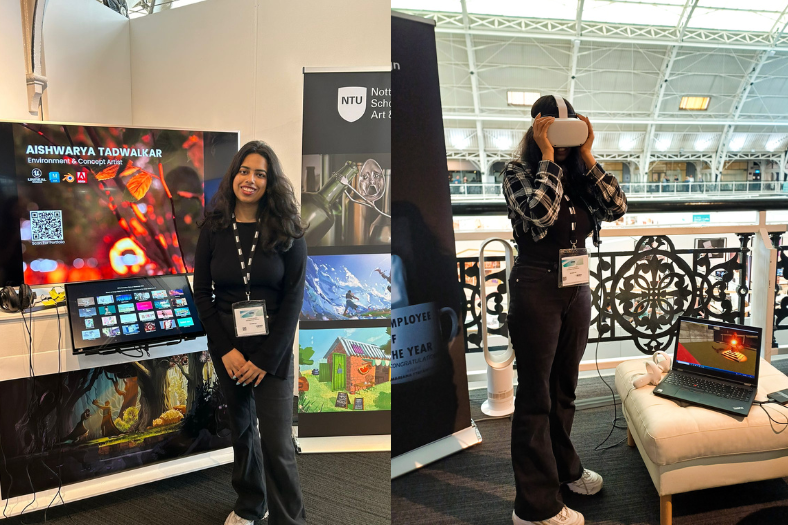
Virtual Reality (VR) is no longer just science fiction. It is a rapidly growing tool that can transform how students experience design and technology. Aishwarya Tadwalkar, a freelance multidisciplinary designer and MA Animation student at Nottingham Trent University, offers an inspiring example for teachers looking to bring immersive technology into their classrooms.
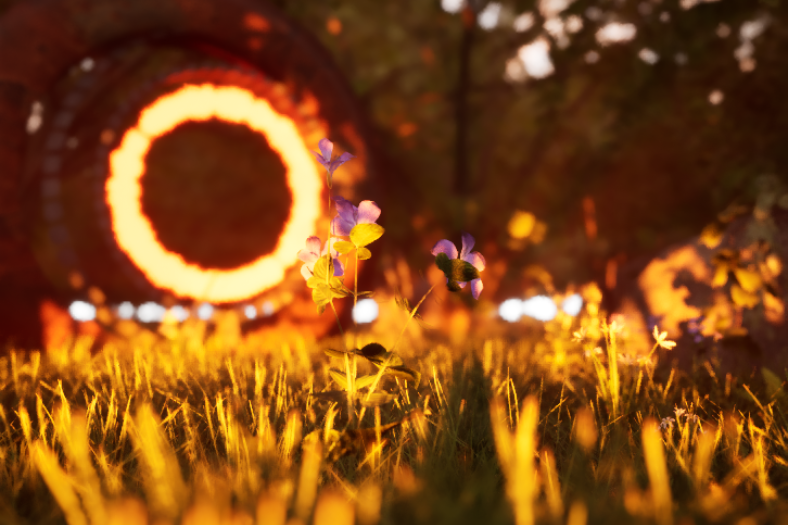
Starting out as a graphic designer, Aishwarya discovered game design during her bachelor’s degree and later explored it further using Unity. Her transition to Unreal Engine during her master’s opened new creative possibilities, allowing her to craft hyper-realistic environments with relative ease. Her first project in Unreal, Abyss, is a survival horror RPG set in an abandoned underground hive city. By combining her graphic design skills with game development, she was able to design immersive props and environments that fully engage players.
Bringing VR into the classroom
Aishwarya’s introduction to VR came through her tutor, Tasneem Guendouz, who encouraged her to adapt Abyss into a VR experience. Experiencing her creation through a headset, she felt a sense of immersion that screen-based games could not replicate. For teachers, this shows how VR can help students understand space, scale and interactivity in design and technology projects. Even simple VR experiences can teach problem-solving, narrative development and technical skills in an engaging, hands-on way.
Her journey also highlights the importance of designing with the user in mind. In VR, every environment and interaction must be intuitive and accessible to the player. This concept links directly to projects such as our ‘Inspired by Industry’ context with Scalextric, where students explore the design and creation of accessible slot car controllers. Even conceptual designs must consider ergonomics, usability and engagement, showing how digital and physical design challenges share the same creative problem-solving principles.
Looking ahead, Aishwarya is developing educational VR games that allow players to actively participate in historical eras. For D&T teachers, this demonstrates how immersive technology can enhance traditional teaching methods, making learning interactive and memorable without replacing core lessons.
Teachers can also encourage students to explore game design through initiatives such as BAFTA Young Game Designers. Open to 10 - 18-year-olds, it provides a platform to develop ideas, showcase creativity and gain insight into the world of games, complementing classroom projects like VR experiences or accessible controller design.
Teachers can download the PDF version of this article, featured in Designing 129 below, and get their digital copy of the magazine here.


