
City of the future sparks creativity in D&T classrooms
Published 17th March 2026
Faye Atkinson-Rowse, a trainee teacher at Finham Park School, has shared her experience using the Maker’s Red Box ‘City of the Future’ resource during her PGCE placement. Drawing on her background in set design, construction, and prop making, Faye found translating industry skills into classroom practice daunting, but this resource helped build both her confidence and her students’ independence.
Flexible hands-on design challenges
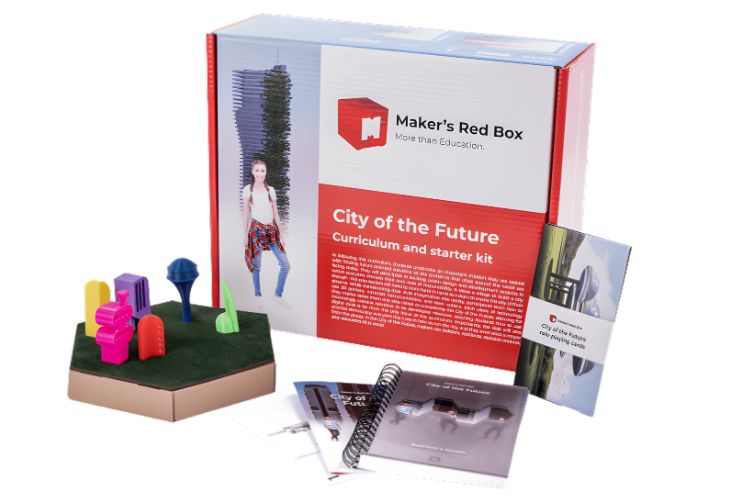
The ‘City of the Future’ resource invites students to collaborate on designing a futuristic city. They select a sector such as transport, energy, health, housing, sport, or entertainment and create a hexagonal tile that contributes to a class-wide cityscape. The box contains high-quality materials, concept illustrations, card-modelling supplies, electronic components, and access to digital files including 3D printing and laser-cutting resources.
Faye observed that the resource naturally encouraged creativity, problem-solving, and real-world thinking. “From energy generation to emerging technologies and sustainability, conversations flowed naturally. My role was to introduce key ideas, then step back and let the students explore and take ownership,” she reflected.
Adaptive teaching in action
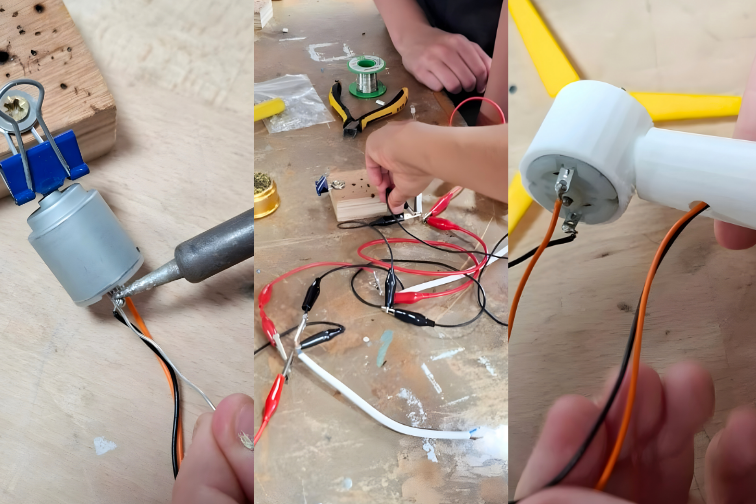
The scheme of learning combines digital and physical making, giving students the chance to develop a wide range of skills simultaneously. Some students explored CAD/CAM design, others soldered LEDs or programmed microprocessors. Lessons were full of energy, collaboration, and experimentation, fostering independent learning. Student feedback highlighted the enjoyment and creative freedom the project offered with comments such as: “It was very creative and enjoyable with a lot of independence.”
The resource also provides flexibility for teachers, allowing projects to be adapted to suit timetables, equipment availability, and student needs. Essential equipment includes microcontrollers, soldering stations, electronic components, and a reliable 3D printer.
Faye concludes that the project demonstrated how ambitious, well-scaffolded schemes of learning can create exciting opportunities for both students and teachers. By stepping back and allowing students to lead, the classroom buzzed with engagement, creativity, and confidence.
Teachers can access the PDF version of this article, featured in DT Practice 1 2026 below and download their digital copy of the magazine here.


