
Primary pupils’ art and D&T on display
Published 26th March 2026
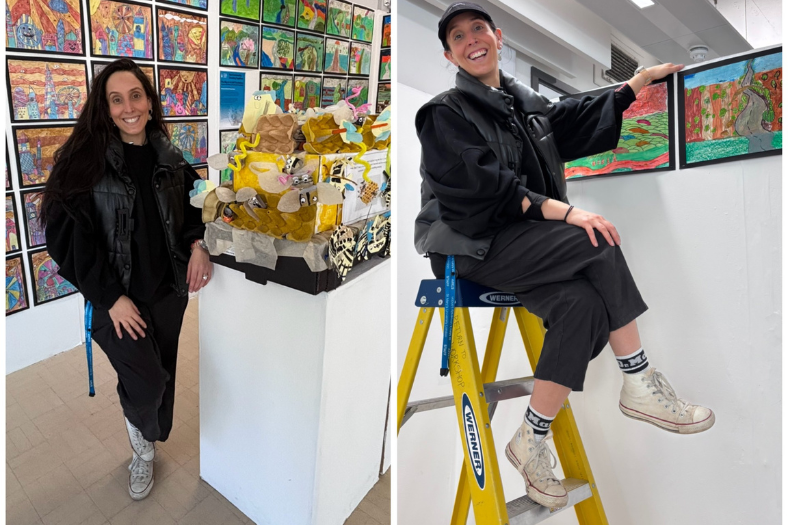
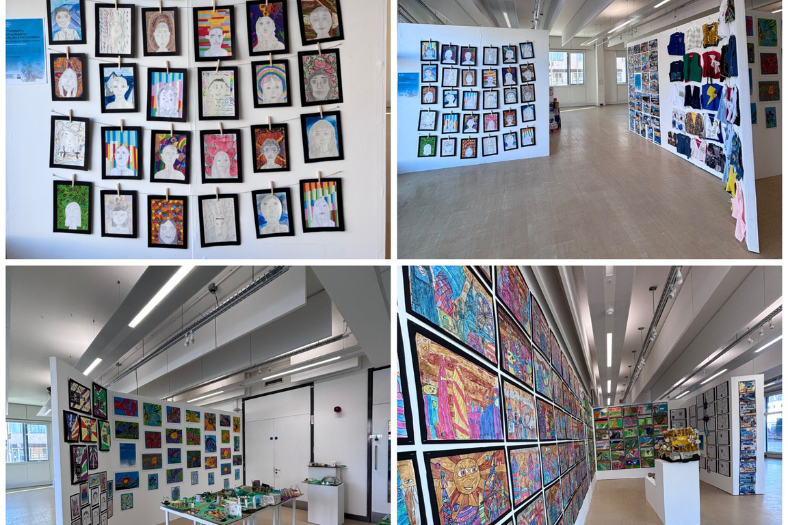
Five primary schools in Southwest London recently brought pupils’ creativity out of the classroom and into the public eye at the Penny School Gallery, Kingston College. The exhibition celebrated children’s artistic and design achievements, showcasing their imagination in both Art and Design & Technology projects.
From classroom to gallery
“Seeing children’s faces light up as they viewed their work in a gallery was truly heartwarming,” said Janine Pavlis, Senior Lecturer in Primary Education, Design and Technology at St. Mary’s University. “Observing their physical D&T products and design iterations offered another unique way of showcasing their work – a fabulous space for creativity.”
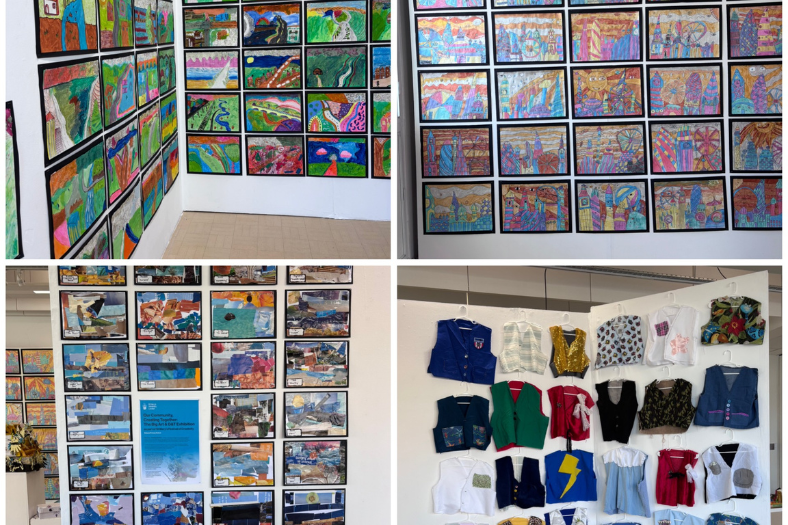
The exhibition presented pupils’ work with care and attention. Paintings were hung, models displayed on plinths, and sketches alongside prototypes revealed the thinking and design process behind each project. For many pupils, this was their first experience of presenting work in a public space, a moment that research shows can boost confidence, motivation and critical thinking while connecting classrooms with the wider community.
A spectrum of creativity
Visitors explored a rich variety of work, from playful Picasso-inspired portraits and expressive self-portraits to collaborative recycled-material beehives, pneumatic toys and thoughtful mixed-media boxes. Schools also presented playground designs and collage experiments, demonstrating how pupils worked like designers and engineers, balancing creativity, problem-solving and imagination.
Tony, CEO of the Design & Technology Association, who attended the exhibition said, “We need more of this type of event. Pupils proudly showed the work they had completed and explained how they had designed solutions to identified problems. It was wonderful to see their design journey, not just the end result.”
A simple model to follow
The Penny School Gallery shows that celebrating children’s creativity doesn’t require a large budget. What matters is creating space, sharing the process, collaborating with other schools, inviting the community and letting pupils lead. Experiences like this remind children that their ideas matter and that their creativity deserves to be seen.
This is a sneak peek of the full story, which will appear in the next issue of Practice magazine.
Back to News

