
900 results found for your search "The 2018/19 GCSE Contextual Challenge and how to go about it"
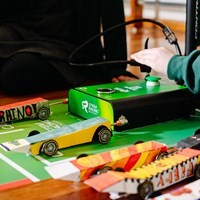
STEM Racing launches STEM Racing Discovery, A classroom project for pupils aged 6+ STEM Racing has launched STEM Racing Discovery, a new classroom-based STEM project designed to introduce pupils aged six and above to engineering and design through hands-on learning. Developed by teachers for teachers, the newly launched programme aims to make STEM education more accessible and easier to deliver in the classroom, with ready-made resources and simplified setup designed to reduce teacher workload. Working in pairs or small teams, pupils design, build, test and...
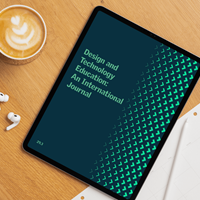
Latest Issue of DATE Journal Now Available!, The Design & Technology Association is thrilled to announce the release of Volume 29, Number 3 (2024) of Design and Technology Education: An International Journal. This renowned publication continues to provide cutting-edge research and insights into the ever-evolving field of design and technology education. Access to a Wealth of Knowledge Research materials, including decades of published papers, are available through the Liverpool John Moores University Open Access Data Repository. This repository contains an extensive archive of papers, dating back to...

D&T at the Labour Party Conference , Our Chief Executive, Tony Ryan, is representing Design and Technology at this year’s Labour Party Conference in Liverpool. Tony has headed north to host the dedicated event at the conference. Reflecting on the journey up, he shared his optimism about the growing recognition of the subject: “We are making sound progress. People do want to get behind our subject, and it is not just a catchy tag line. Design & Technology matters… it really is...
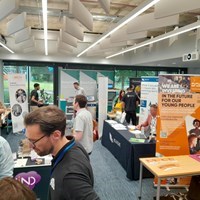
University of East Anglia Hosts Inspiring Big D&T Meet, The University of East Anglia was abuzz with excitement on Friday as it played host to the Big D&T Meet, a fantastic event organised by teachers for teachers. With over 300 pupils, over 45 exhibitors and 42 speakers, the event highlighted the vibrant and supportive community within the D&T education sector. The event also included raising awareness of the Sanjay Mortimer Foundation with over £1,000 raised for the charity which supports Neurodiverse students in a career in...
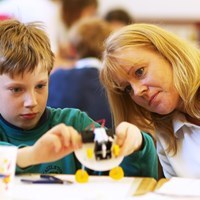
Our school wants to get to grips with the new curriculum – where should we start?, There is a wide range of guidance developed by the D&T Association to help primary schools implement the new requirements. The resources available through the Association’s website provide a coherent package of advice and support that should enable any primary school in England to get the new curriculum up and running. The simplest way to find out about these materials, and to get up

Structures: Whose Home?, Structures: Whose Home? 5-7 YearsStructuresFirst published 2019 Children are often happy to talk about their homes and families and this resource gives them the opportunity to use this knowledge and experience in a practical way. Making model homes will enable them to develop and use basic constructional skills using sheet and reclaimed materials to make freestanding structures stronger, stiffer and more stable, together with appropriate joining techniques. Using construction kit materials will help their understanding of strength and stability in structures....

UK Space Agency Resources, Inspiring the next generation: design and technology in spaceThe space industry provides young people with an inspiring context for developing skills and for thinking about future roles and careers. This set of resources offers schools information and activities to inspire young people aged 11-16 and to understand the roles and impact of the space industry, increasing their awareness of and interest in the sector. The resources are structured around Satellite Launch Systems and the James Webb Space Telescope,...

STEM Careers resources Graphic Designer, Age 11-14 years This unit raises awareness of career opportunities in Graphic Design. It provides an opportunity for pupils to explore a typical career path, gives an insight into the diverse nature of Graphic Design and has a rapid response creative designing activity working to a tight deadline. There are teacher notes and worksheets while the PowerPoint presentation introduces a graphic designer, giving his background and experience and examples of graphic design. The resource also includes information about careers and links
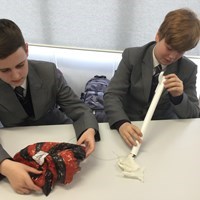
UK Space Agency STEM resources, These STEM resources for KS3 and KS4 are based on the James Webb Space Telescope and Satellite Launch Systems. Pupils will learn all about these fascinating, STEM-related areas, get to launch rockets, build their own telescopes and study the maths, science, engineering and design aspects of getting into space and observing the sky and the Earth. There is a wealth of detail that teachers can adapt and link in to other subject areas as well as encourage an understanding and...

Member only Tasks and Activities, Focused Tasks FTs are where students are taught specific technical knowledge, designing skills and making skills. This may be a quick whole-class making activity, learning a new CAD programme, exploring polymers, or much more. Investigative Evaluative Activities IEAs are where students learn from a range of existing products and find out about D&T in the wider world. This may be aspects such as product disassembly, reflection and prediction and discussions and explorations regarding sustainability. Curriculum units Click on
Choose an option to filter your search results.
All results (900) Shop products (207) Events (36) News (264)