
1114 results found for your search "Planning to teach the new GCSE in design and technology"

GCSE Results Day 2025, Today is an important milestone for students across the country as Level One and Two results are released. First, let’s take a moment to celebrate their efforts. If the grades in those envelopes are what was hoped for, that is fantastic and well done for the hard work that made it possible. If things did not quite go to plan, this is not the end of the road. Take time to pause, reflect, and think about what could be done differently next time....
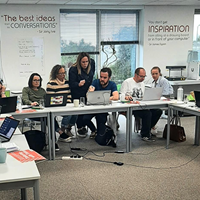
Empowering Secondary Teachers in Design and Technology, This month, we hosted a three-day training course at our headquarters in Banbury, aimed at equipping secondary teachers with the necessary tools to deliver an engaging and comprehensive Design and Technology (D&T) curriculum. The event drew educators from various schools to enhance their grasp of D&T and refine their teaching methods. Over the course of three intensive days, participants engaged in a series of enriching discussions, workshops, and hands-on experiences, led by our experienced...
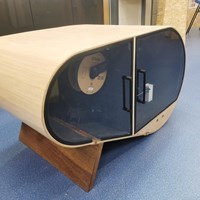
New Furniture Makers Exhibition , The New Furniture Makers Exhibition Exhibition returns to the City of London on 29th October, offering an inspiring platform for emerging designer-makers to showcase their creativity and craftsmanship. Organised by The Furniture Makers’ Company, this prestigious one-day event brings together students from GCSE level through to recent graduates, celebrating the next generation of talent in furniture and design. It also provides a unique opportunity for young designers to connect with leading industry professionals, manufacturers,

GCSE Results Analysis 2024, Today, students across the UK receive their hard-earned GCSE results. Before we look at the results achieved within our subject, I would like to congratulate the students who are now in possession of their grades; if they are as expected, that’s just brilliant and well done for making it happen. Take a moment in the next few days to acknowledge what you did well that has made these results possible; also, no matter how good things turn out, there is always something you could have...

Celebrating excellence in design and technology, The Design & Technology Association Excellence Awards celebrate individuals who make a real impact in design and technology. Founded in 1999 by the Design & Technology Association Trustees, the awards recognise teachers, pupils and industry partners who go above and beyond to inspire and shape learning in the subject. Each submission is carefully reviewed by the trustees and executive team, with winners chosen based on the information...

BS 4163:2021+A1:2022 Health and safety for design and technology in schools and similar establishments – Code of practice, BS 4163:2021+A1:2022 Health and safety for design and technology in schools and similar establishments – Code of practice - Printed Booklet A4 printed booklet. This essential document is the basis for all D&T Health and Safety publications and guidance and provides an explanation of the legal aspects of the British Standard Code of Practice. In any investigation by the...

The Design and Technology Teacher Education Group, The Design and Technology Teacher Education Group (DTTEG) held its anticipated D&T Teacher Education Knowledge Exchange Symposium on Monday 2nd June, hosted by Make UK, in Birmingham, and sponsored by the Liverpool Institute for Research in Education (LIF). This event could prove to be a cornerstone for professionals in the field of D&T teacher education and development (be it initial teacher training or in-service CPD), fostering collaboration and innovation between universities, schools, MATs, D&T organisations...

Exam Results GCSE in D&T 2015, GCSE Design and Technology Exam result statistics compiled by the D&T Association for 2015The D&T Association has produced two spreadsheets which provide analysis of this summer’s design and technology examination results. The data has been compiled from two sources: the Joint Council for Qualifications and the awarding body websites (AQA, Edexcel, OCR, WJEC and CCEA). The results provide departments with overall entry and performance figures and the associated trends since 2000. They also provide comparative...

Design Innovation, Age 11-16 yearsFirst published 2013 This project is aimed at Key Stage 3 and 4 students studying product design and consists of six lessons of one hour each. It focuses on critical assessment, research and using results to develop and communicate ideas. There are many approaches to innovation in product design to stimulate ideas, from models, a critical examination of existing products, real or imagined; to sessions including Hothousing, Crowd Sourcing and Open Sourcing concerned with generating and gathering ideas and...
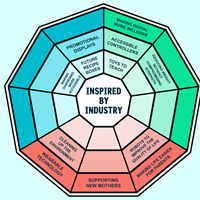
Inspired by Industry: New Contexts, We are excited to release three more contexts as part of our range of free resources for KS3. Have a look below: Lisi Aerospace Lisi Aerospace are a worldwide manufacturing specialist for assembly solutions as well as engine and structural components used in aircrafts. This context asks you to consider ‘Reducing weight without compromising strength’. JCB JCB are one of the world’s largest construction equipment manufacturers. Their brand is well known in the UK and overseas and...
Choose an option to filter your search results.
All results (1114) Shop products (289) Events (0) News (300)