
Engineering wonders - The Falkirk Wheel
Published 12th August 2026
Where design meets engineering
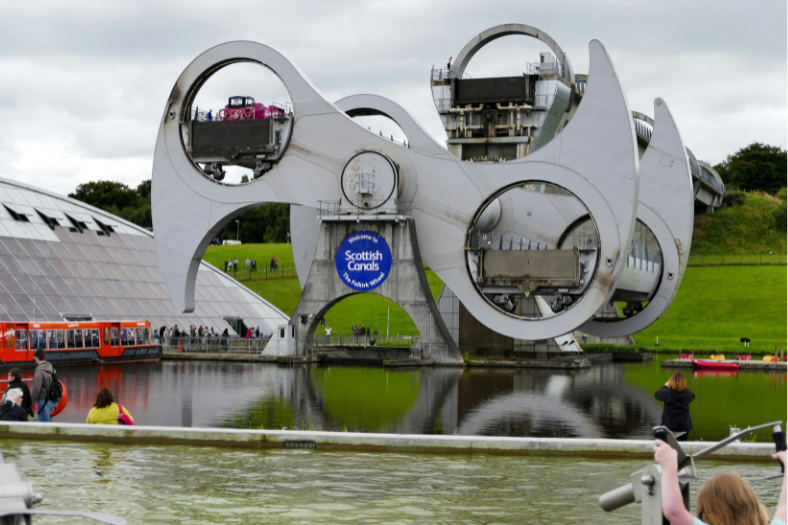
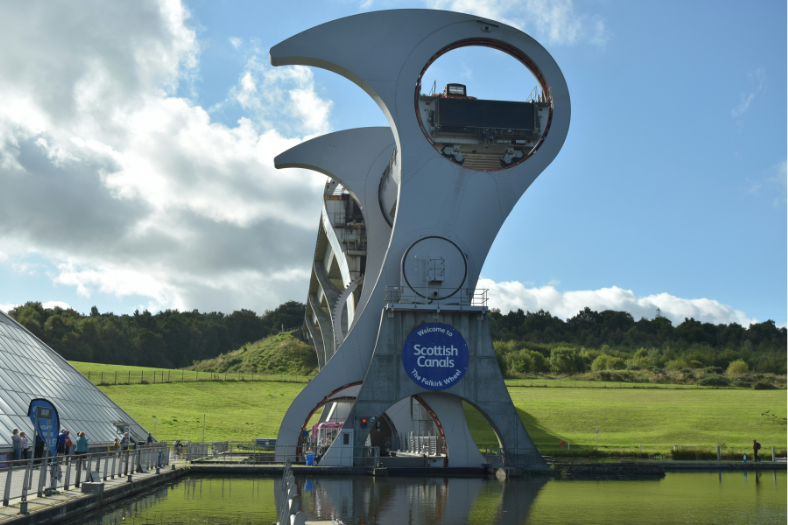
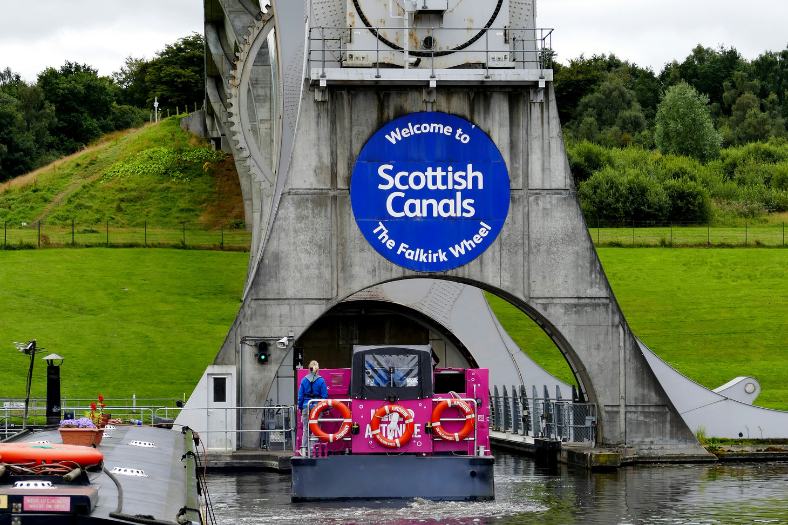
The Falkirk Wheel is a striking example of how creative design and engineering can combine to solve a complex practical problem. Opened in 2002, the 35-metre structure connects Scotland’s Forth & Clyde Canal with the Union Canal, which sits 35 metres higher. It replaced a former flight of 11 locks, providing a much more efficient way for boats to travel between the two waterways.
The Wheel is the world’s only fully rotating boat lift. Two water-filled gondolas sit at opposite ends of the structure, with one rising as the other descends. The design uses Archimedes’ principle, with the gondolas balanced so that the mechanism requires relatively little energy to rotate.
From engineering marvel to classroom challenge
For design and technology teachers, the Falkirk Wheel offers a rich real-world example for exploring mechanisms, structures, materials, systems and engineering design. Its scale also provides an opportunity to consider a fundamental engineering challenge: how can a structure provide the required strength and performance without unnecessary material or mass?
This creates a natural link to the Inspired by Industry context with Lisi Aerospace. Lisi Aerospace specialises in aerospace fixings, where reducing weight while maintaining strength and performance is particularly important. The same design thinking can be applied to many other products and structures, making the Falkirk Wheel an engaging starting point before students develop their own solutions.
Students could investigate how structural forms, material selection and geometry influence strength and mass, then test their own prototypes to compare performance. CAD could also extend the activity, with tools such as FEA and generative design helping students explore how a design might be optimised.
The Falkirk Wheel demonstrates that successful engineering is about more than making something work. It involves understanding requirements, making informed decisions about materials and structure, testing performance and finding efficient solutions to real-world problems. For teachers, it offers a memorable way to connect these ideas to practical design and technology learning.
Back to News

