
Progress 8 Response
Published 7th May 2026
D&T Association response headlines
The Design & Technology Association has submitted our response to the Department for Education's recent consultation on reforms to Key Stage 4 performance measures.
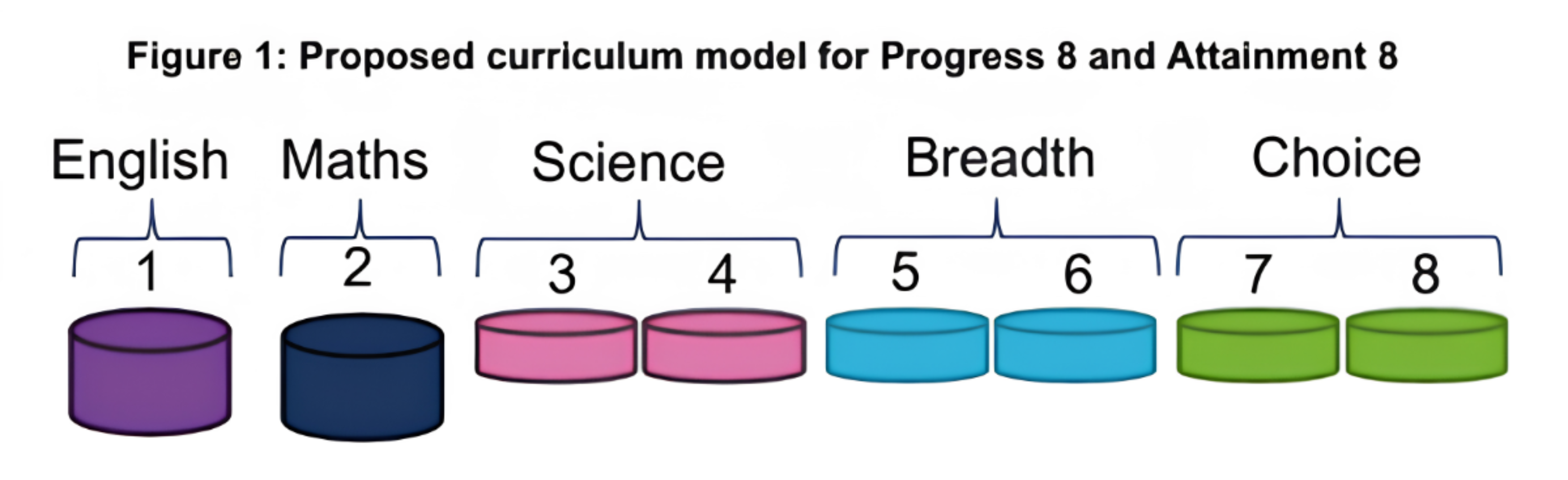
One of the key decisions affecting design and technology was the placement of D&T within the revised slots of the proposed model. This model moves away from the English Baccalaureate (EBacc) subject slots, instead adopting a structure with eight slots: double-weighted English and Maths, two dedicated science slots, and four 'breadth' or 'choice' slots.
D&T was specifically mentioned as being included in the 'creative subjects' alongside drama, music, art & design and dance, or proposed as part of an additional, third science slot alongside biology, chemistry, physics and computer science. This was one of the main questions posed in the consultation.
Proposed curriculum model for Progress 8
Our responses are summarised below:
12. What are your views on the inclusion of a fourth category (science) for breadth slots 5 and 6?
We support including a fourth category, with design and technology (D&T) falling within it, as suggested. D&T, a subject that integrates creative design activity with technological understanding and practical making, has persistently challenged conventional distinctions between academic and vocational knowledge, theory and practice, and creativity and utility. There is little doubt about the importance of science to our young people, industry, and the economy, and those who wish to study this field in greater depth should have the option to do so. Design and technology provides a unique opportunity in this category.
13. Do you agree that Progress 8 should allow technical awards in the breadth and choice slots, with a maximum of two across all slots?
We believe technical awards should be featured in both the breadth and choice slots. These qualifications provide a credible and valuable pathway for many young people, offering a diverse range of disciplines. We do not consider it necessary to impose a maximum limit on the number of technical awards in these slots, as these qualifications can deliver rigour and demand comparable to GCSEs, albeit through alternative curricular contexts. We also feel that GCSE Food Preparation and Nutrition should be eligible for inclusion in the breadth slots due to its importance in promoting pupils’ health, independence and life-readiness. Similarly, technical qualifications such as Hospitality and Catering could remain in the choice slots.
15. Do you have any other comments on the proposed changes?
Persistent challenges remain, including issues surrounding teacher recruitment and retention, access to high-quality subject specific professional development, and sufficient capital and resource investment.
Many schools now operate under a faculty model, in which related subjects collaborate to support curriculum delivery, staffing, and resource management. In our experience, design and technology is most commonly positioned within a creative arts faculty alongside subjects such as art and design, music, and drama. Should D&T be repositioned within the science category, this may necessitate structural reorganisation within schools.
If design and technology is to be formally recognised within the fourth category, we would strongly encourage the government to acknowledge the subject's significant contribution and ensure that this recognition is accompanied by appropriate levels of investment and strategic support to enable schools to transition.
Food and Nutrition remains within the auspices of D&T in the National Curriculum, and we welcome this. At KS4, Food and Nutrition has gained its own identity, and GCSE numbers have grown in recent years. We support every student’s right to continue studying Food and Nutrition and therefore respectfully suggest that the DfE carefully consider its placement at KS4.
Throughout other questions, we also stressed:
The need to focus on teacher recruitment and retention. We require the DfE to support this through a range of targeted and sustained measures. This includes alignment with science in bursaries, scholarships, and student loan repayment schemes; access to high-quality CPD opportunities; capital investment; and recognising and supporting the important role that D&T technicians play in ensuring the subject delivery runs smoothly and safely.
We shared concern that schools may seek to deploy science technicians within design and technology departments as a cost saving measure. We also stressed the distinct nature of the roles and welcomed greater recognition and support for design and technology technicians, comparable to that provided for their science counterparts, including the development of clear apprenticeship pathways and recognised qualification routes.
Ryan Ball
Director of Education
D&T Association


