
World Hunger Day
Published 28th May 2026
How tactile packaging design is helping reduce food waste
A student design project making global impact
Food waste remains one of the world’s biggest environmental challenges, with millions of tonnes of edible food discarded every year due to cautious expiry dates. On World Hunger Day, innovative packaging technology developed from a student project is highlighting how design and technology can help tackle this issue in practical, inclusive ways.
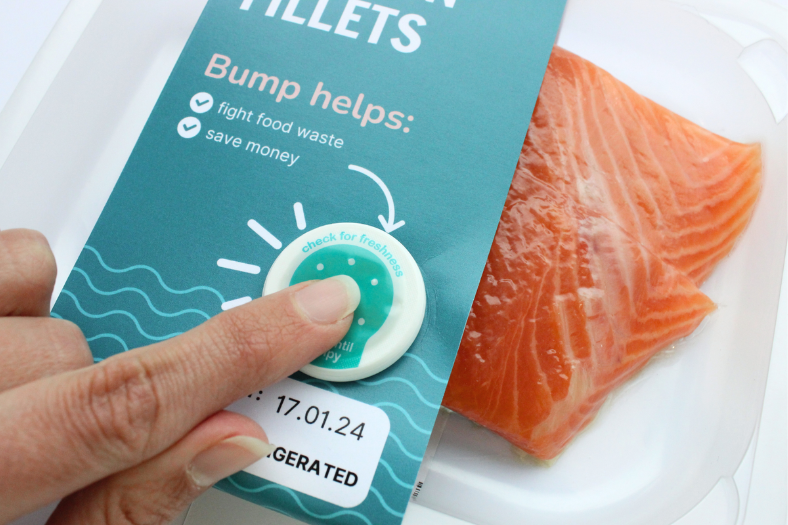
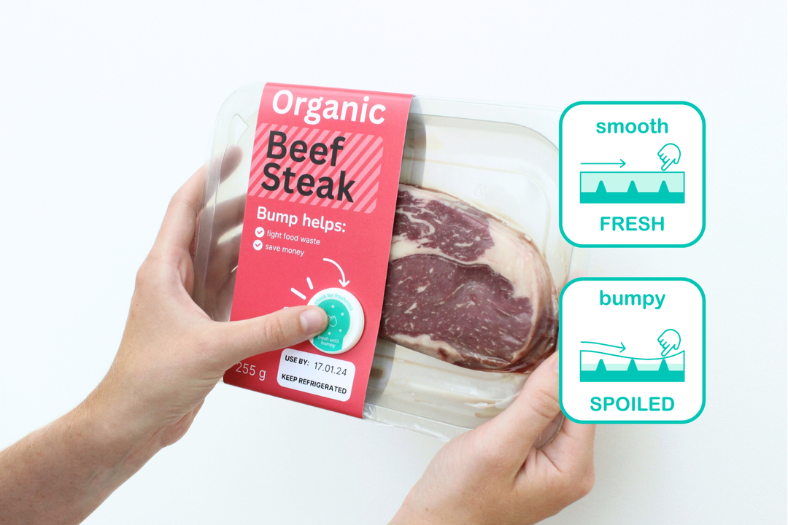
Bump by Mimica, created by industrial designer Solveiga Pakštaite while studying at Brunel University London, is a tactile freshness indicator designed to give consumers a more accurate understanding of when food has genuinely spoiled. Instead of relying solely on printed dates, users can run a finger across the label to check freshness through touch.
Inclusive design with real classroom relevance
The technology uses a temperature-sensitive gel that reacts to the conditions food experiences during storage and transport. When food is fresh, the label feels smooth. As the product begins to spoil, bumps gradually appear beneath the surface, creating a simple but effective tactile warning system.
For design and technology teachers, the project offers a strong real-world example of how design thinking, materials science and user-centred innovation can combine to solve complex problems. It also demonstrates the importance of inclusive design, as the label can be understood through touch, supporting users with visual impairments.
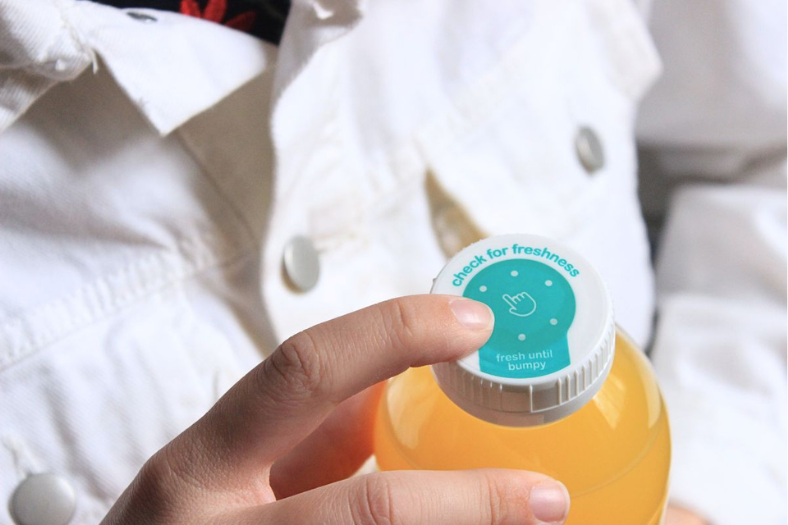
Mimica’s Bump technology has already expanded into products such as Bump Tags for packaged foods and Bump Caps for milk and juice bottles, with industry trials currently underway. The company is also exploring applications beyond food, including pharmaceuticals and vaccines.
The project provides valuable classroom discussion opportunities around sustainability, packaging design and responsible innovation. It also supports learning linked to materials, manufacturing and environmental impact, helping teachers connect design and technology to meaningful global challenges that directly affect everyday life.
Inspired by Industry context from Bulletproof
Teachers looking to extend learning further can connect the project to the Inspired by Industry context from Bulletproof, which explores packaging sustainability and secondary uses. Students can investigate how packaging can move beyond its primary function by experimenting with materials such as card, paper, mycelium, timber, fabrics or polymers.
The context encourages students to apply the 6R’s of sustainability while developing innovative packaging concepts with multifunctional or repurposed outcomes, from plantable packaging to reusable designs. It also provides opportunities for collaboration with local businesses, helping students understand how industry is responding to environmental challenges through thoughtful, sustainable design.
Teachers can access the PDF version of this article, featured in Designing 133 below and download their digital copy of the magazine here.


