


Behind the product: Fiskars’ orange-handled scissors
How Fiskars’ orange-handled scissors became a design classic
A familiar essential, Fiskars’ orange-handled scissors demonstrate how thoughtful design, practical problem solving and even a happy accident can create an iconic product.
A brighter idea for everyday cutting
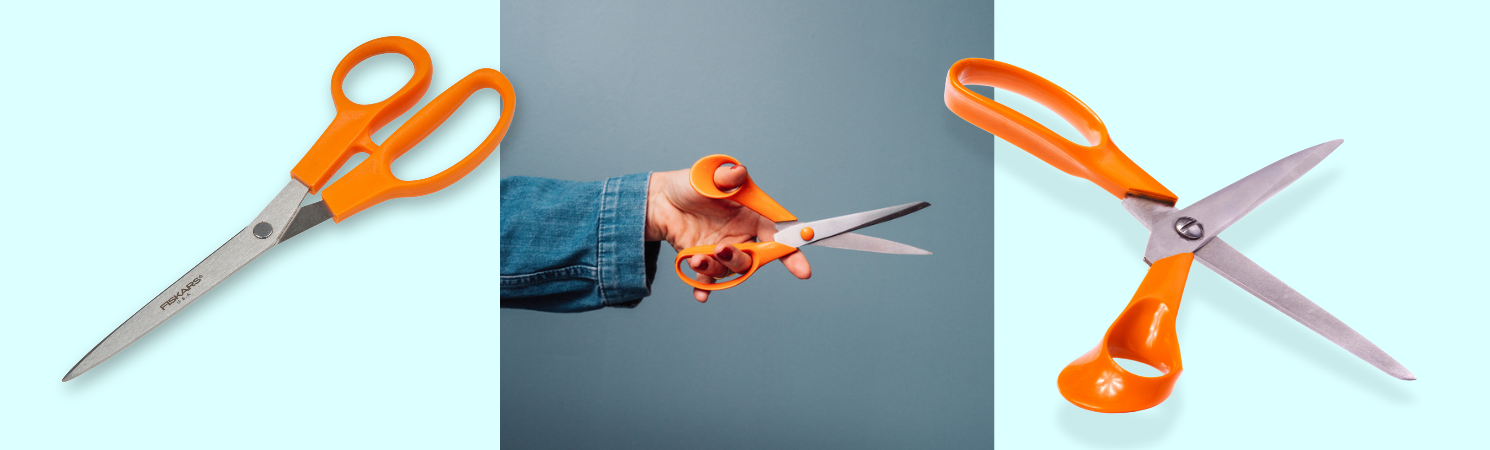
Introduced in Finland in 1967, the scissors were designed by industrial designer Olof Bäckström. Fiskars aimed to create a lighter, more comfortable and affordable alternative to traditional all-metal scissors. Plastic handles improved ergonomics, while developments in blade grinding enhanced cutting performance. The combination made everyday cutting easier and brought well-designed scissors within reach of more people.
Their distinctive orange colour was almost accidental. During prototyping, a machinist used leftover orange pigment from another product. Samples were produced in several colours, and an internal vote ultimately selected orange over black. What began as a practical manufacturing decision became a defining feature of the design.
Design that continues to evolve
The scissors combine metal blades with moulded plastic handles, illustrating how material choices can influence comfort, performance and production costs. Manufacturing methods have developed over time, with blade production moving from forging and grinding towards precision stamping from sheet steel. The design has also been refined to improve ergonomics and cutting performance.
More than a billion pairs have been sold worldwide, and the design remains a recognisable example of functional product design.
For design and technology teachers, the scissors offer an accessible starting point for product analysis. Students can investigate how material properties, handle shape, pivot mechanisms and blade geometry affect usability. Comparing scissors designed for different users can also introduce inclusive design, sustainability and the importance of testing prototypes.
Teachers could ask: How does changing the handle material affect comfort, cost and durability? And if the orange colour had never been chosen, would the scissors be just as recognisable today?
This everyday tool shows students that successful design is rarely just about appearance. It is about understanding users, making informed decisions and continually improving a product.