


Design icons: The original Apple iPod
How thoughtful design changed music
A new way to carry music
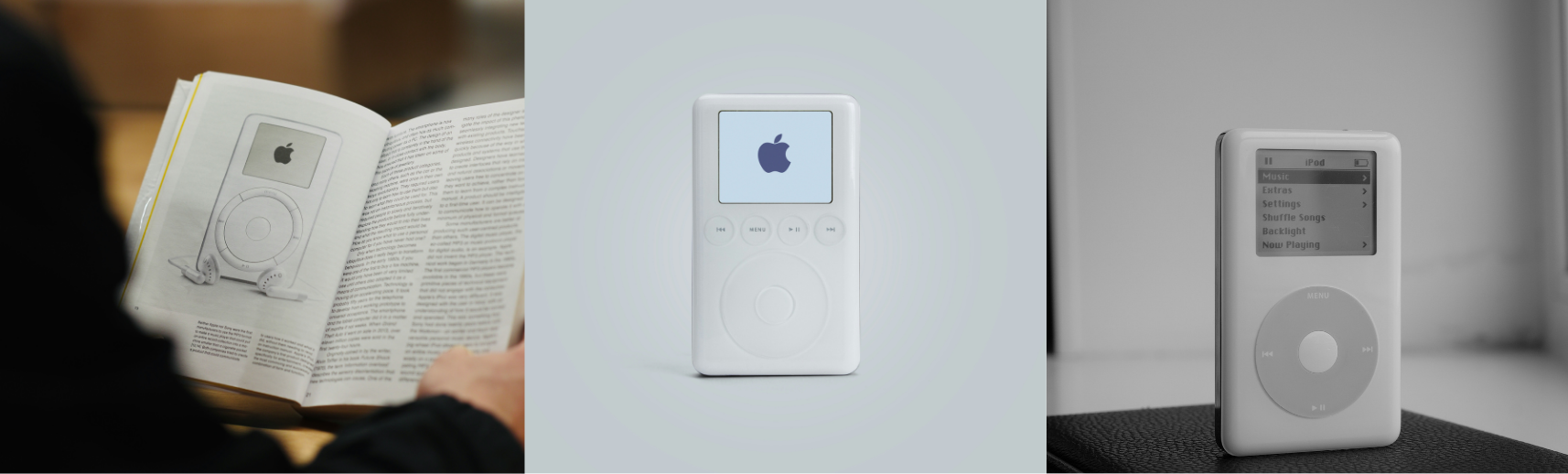
When Apple unveiled the first iPod on the 23rd October 2001, digital music was growing, but many MP3 players were difficult to navigate and offered limited storage. Developed by a team led by hardware engineer Tony Fadell, alongside Apple's industrial design team headed by Jony Ive, the iPod set out to make carrying and enjoying a large music collection simple. Its promise was striking: “1,000 songs in your pocket”. A 5GB hard drive delivered that capacity in a compact device weighing just 6.5 ounces.
Design that puts people first
The iPod's success came from more than its storage. Its clean white front, stainless-steel back and distinctive proportions gave it an instantly recognisable identity. The mechanical scroll wheel made browsing music intuitive, while integration with iTunes simplified organising and transferring songs. Hardware, software and user experience worked together as one coherent design.
The iPod helped shape expectations for portable music and consumer electronics, influencing how people accessed and enjoyed digital media. However, its original Mac-only compatibility also highlights how design decisions can create barriers for some users.
For design and technology teachers, the iPod offers opportunities to explore ergonomics, aesthetics, interaction design and user-centred thinking. It also links directly to D&TA's Year 8 Inspired by Industry context, Making Digital Music Inclusive, developed with Salsus Design. Pupils can investigate how digital music experiences have evolved and how designers respond to different user needs.
How would today's designers rethink the original iPod to make digital music more inclusive and accessible?